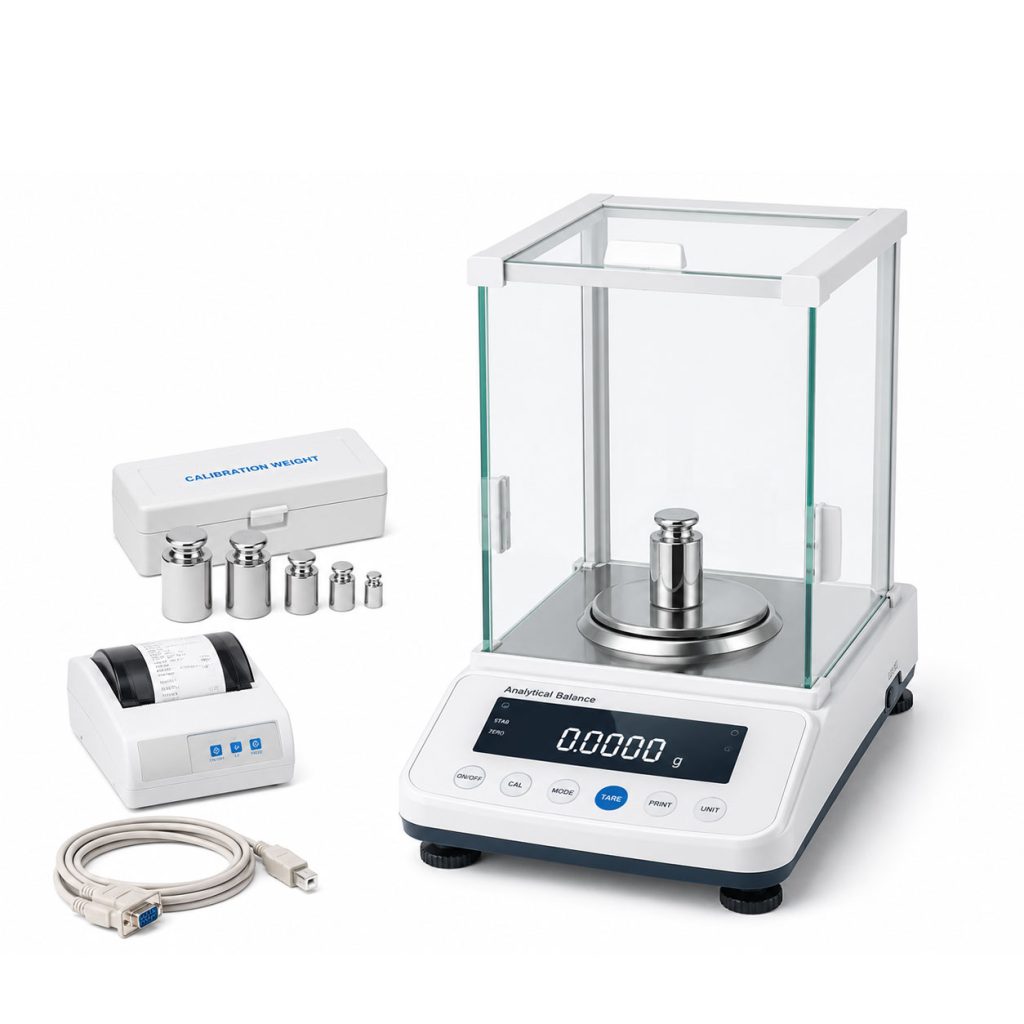
Analytical Balance
Analytical balances for high-precision laboratory weighing in pharmaceutical, research, quality-control, university, and testing laboratories, with configurations selected according to weighing capacity, readability, calibration method, draft-shield design, data connectivity, and daily measurement requirements.
Analytical Balances for High-Precision Laboratory Weighing
UMY Medical supplies analytical balances for pharmaceutical laboratories, research facilities, quality-control departments, universities, and testing laboratories. Available models support high-precision weighing of chemicals, powders, reagents, reference standards, formulations, and small laboratory samples.
Analytical Balance Product Range
The range includes analytical balances with enclosed draft shields, internal or external calibration options, multiple weighing units, and data-output functions. Configurations vary by maximum weighing capacity, readability, repeatability, linearity, stabilization time, calibration method, draft-shield design, interface options, and available weighing applications.
Selecting an Analytical Balance
Confirm the required maximum weighing capacity, readability, sample type, required accuracy, and calibration method before selecting a balance. Buyers should also review repeatability, linearity, stabilization time, draft-shield design, anti-vibration requirements, weighing-pan size, internal or external calibration, RS232 or USB connectivity, printer compatibility, and available bench space.
Showing the single result
Analytical Balances Across Precision Laboratory Weighing Workflows
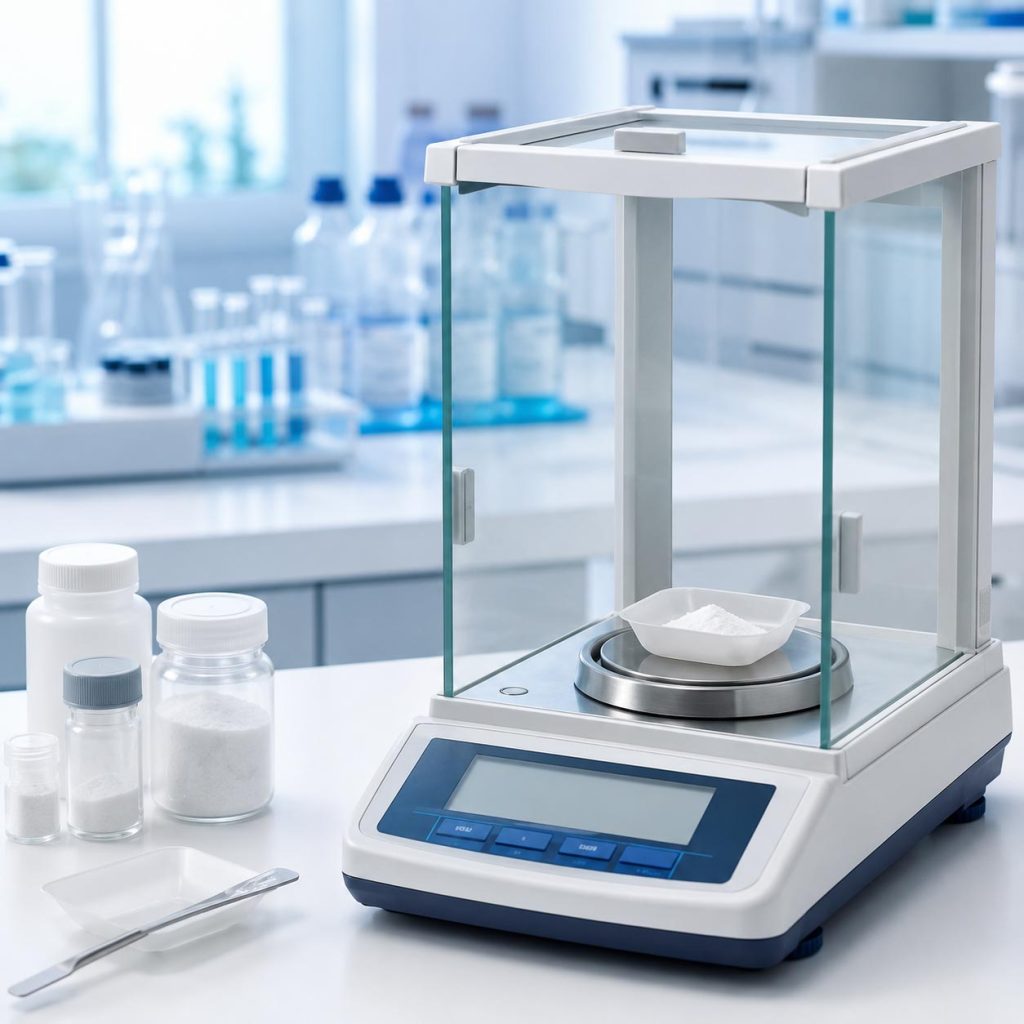
Analytical balances support high-precision weighing of chemicals, reagents, standards, powders, formulations, and small laboratory samples. They are commonly used in pharmaceutical research, formulation, quality control, environmental testing, universities, and routine quantitative laboratory work.
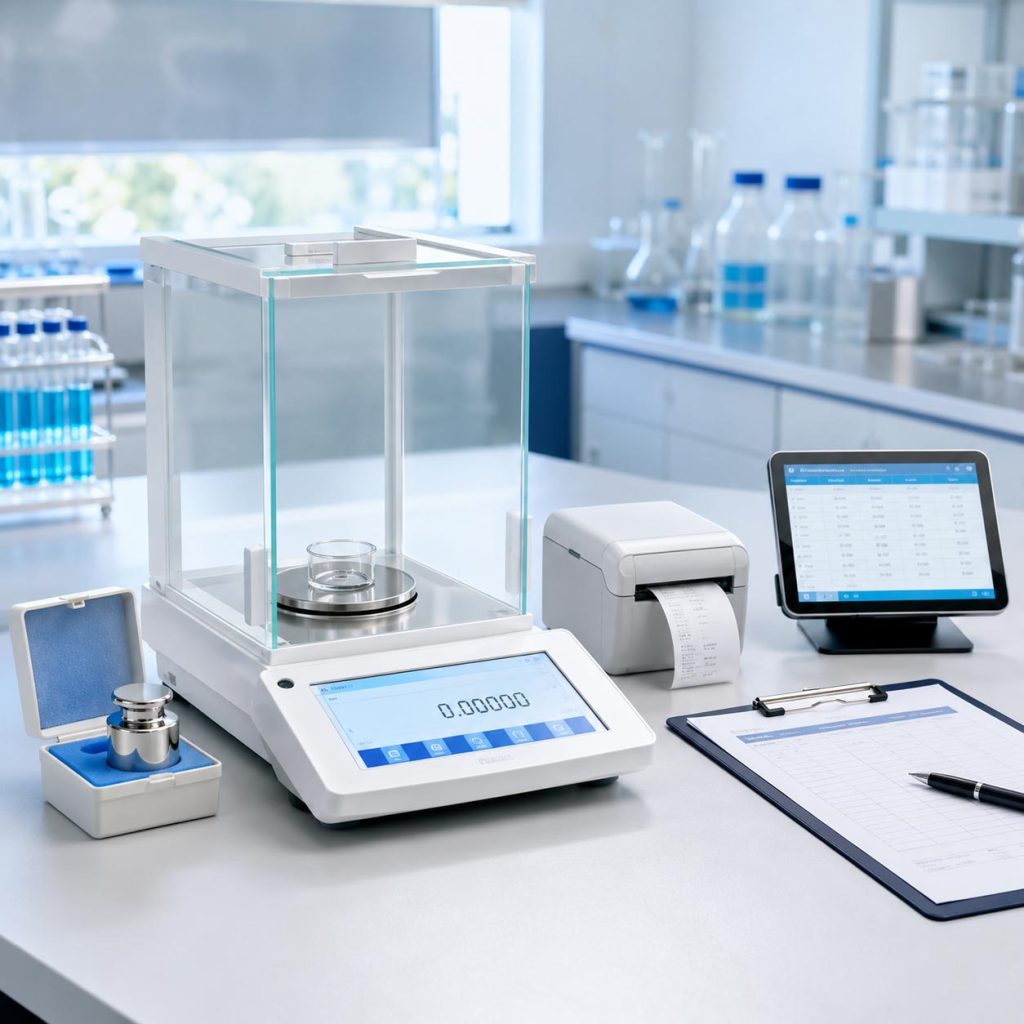
The selected balance should match the required capacity, readability, sample type, weighing environment, and calibration method. Buyers should also confirm repeatability, linearity, stabilization time, draft-shield design, vibration and static-control requirements, data connectivity, printer compatibility, and available bench space.


Analytical Balance FAQ