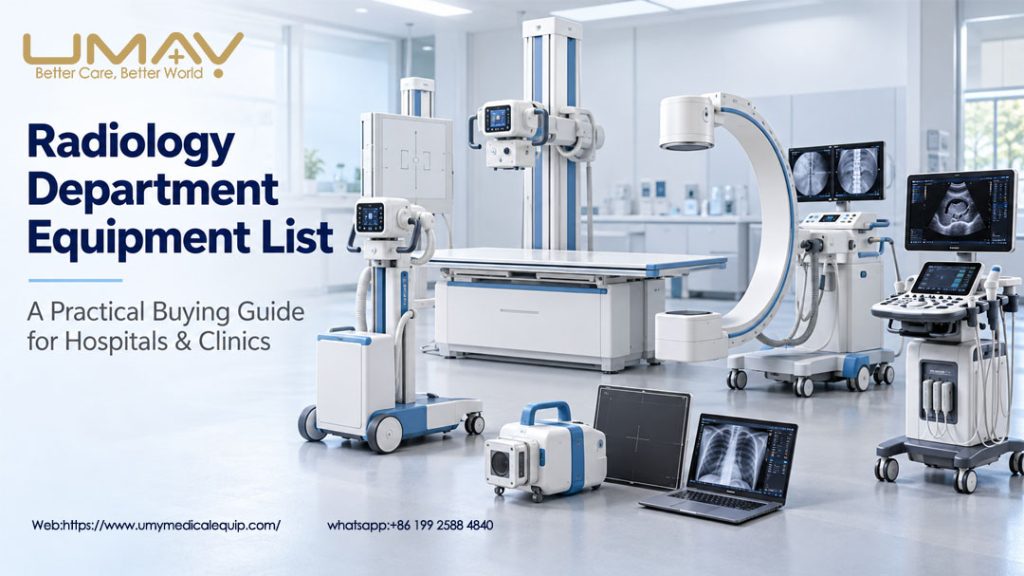
Planning a hospital radiology department is not simply a matter of selecting an X-ray machine. A practical equipment plan must reflect the examinations a facility intends to provide, the number and condition of patients it will serve, the available space, and the people who will operate and maintain the systems.
This guide provides a radiology department equipment list for hospital procurement teams, medical equipment distributors and diagnostic center planners. It explains which imaging systems belong in a basic service, when mobile imaging or advanced modalities may be justified, and what information to prepare before requesting a quotation.
1. Radiology Department Equipment Checklist
The equipment below covers common diagnostic imaging workflows. Not every facility needs every modality: the appropriate combination depends on clinical demand, referral pathways, staffing, budget and local authorization requirements.
| Equipment | Primary role | Typical purchasing priority |
|---|---|---|
| Fixed digital radiography (DR) system | Routine radiographic examinations in a dedicated room | Foundational where general X-ray services are planned |
| Mobile digital X-ray system | Bedside examinations in wards, emergency areas and critical care | Common additional requirement for inpatient hospitals |
| Portable X-ray unit | Flexible imaging arrangements where a compact source is appropriate | Application-dependent; assess generator, detector and positioning needs |
| Flat panel detectors and workstation | Digital image capture, review and transfer in compatible DR systems | Essential components of a DR workflow; may be included in a system quote |
| Ultrasound system | Abdominal, vascular and other examinations according to probes and software | Selected according to services; sometimes managed by a separate department |
| CT scanner | Cross-sectional X-ray imaging for defined clinical indications | Expansion or referral-center investment |
| MRI system | Magnetic resonance imaging for appropriate clinical services | Specialized investment requiring separate site and safety planning |
| Room and workflow infrastructure | Radiation protection where applicable, power, viewing, storage and reporting | Plan alongside the imaging equipment, not after installation |
Planning note: This is a procurement framework, not a universal clinical or regulatory minimum equipment list. Local clinical leadership and qualified technical specialists should confirm the final scope.
2. Plan the Equipment Mix Around Your Facility
Outpatient clinic or small diagnostic center
Start with the examinations patients are likely to receive on-site. A dedicated DR room may be a priority for a facility establishing a general radiography service. An ultrasound system may form a separate service line if trained operators, suitable transducers and reporting arrangements are available. Do not assume a compact portable X-ray generator can replace a fully planned radiography room without reviewing clinical performance and radiation-protection requirements.
General hospital with inpatient and emergency services
A fixed DR room can support scheduled examinations, while a mobile X-ray system addresses patients who should not be transported readily. Evaluate corridor and elevator access, patient-bed clearance, detector workflow and the connection between radiology, emergency, operating areas and inpatient wards. The correct equipment combination depends on actual patient pathways, not merely the hospital’s bed count.
Regional referral hospital or advanced imaging center
CT or MRI may be appropriate when referral volume, clinical coverage, specialist staffing, infrastructure and operating costs support those services. Each modality creates its own requirements for installation, equipment acceptance, quality assurance, maintenance and patient safety. Adding advanced equipment without accounting for the full operating workflow can delay the start of service.
3. UMY Medical Equipment Options for Radiology Procurement
The following are examples from the UMY Medical product catalog. They illustrate available equipment types rather than a fixed bundle. Generator power, detector selection, software, accessories and delivery scope should be confirmed for each quotation.
Fixed digital X-ray for a dedicated radiography room
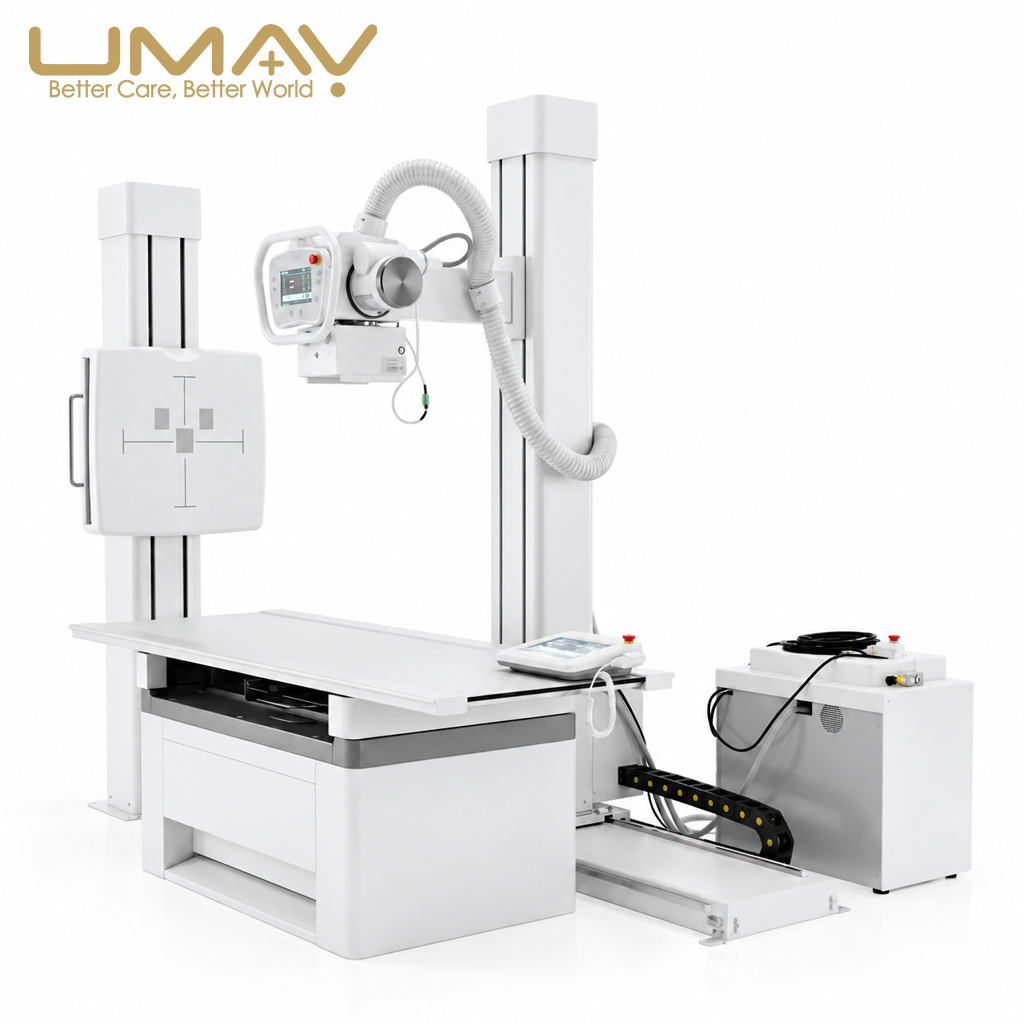
UMDRXY006 Dual-Column Digital X-Ray System is listed with 32 kW, 50 kW, 65 kW and 80 kW generator configuration options. Its product description includes a four-way floating table, vertical Bucky stand, DR workstation and wired or wireless detector options. It is a suitable reference when evaluating a dedicated general-radiography installation.
Buying questions: What examinations and workload are expected? Which generator and detector configuration is required? Is the proposed room layout suitable for the selected X-ray unit and patient table?
Mobile digital X-ray for bedside examinations
UMDRXY004 Mobile Digital X-Ray Machine is listed with 32 kW or 50 kW generator options, a wireless detector workflow and a self-balancing tube arm. It is intended for bedside radiography where moving the patient to the fixed imaging room is impractical.
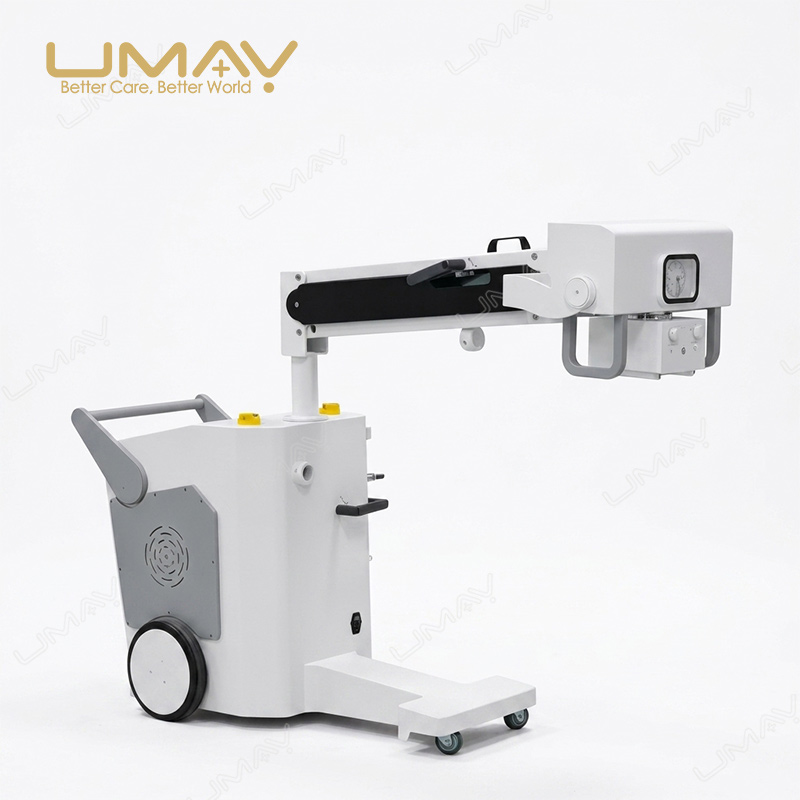
Buying questions: Will it fit the ward corridors and elevators? How is the detector charged and moved? Can image data be transferred into the facility’s existing workflow?
Compact portable X-ray for selected mobile workflows
UMDRXY005 5.6 kW Portable Digital X-Ray Machine is listed as a compact X-ray option with a touchscreen interface. Depending on configuration, the system can be paired with a wired or wireless 17 × 17-inch detector, a mobile stand, radiographic table and workstation. The RFQ should identify which of these items are required; they should not be assumed to be supplied together.
Buying questions: Is a compact portable unit appropriate for the intended examinations? Which positioning accessories, detector and image-processing components are needed? What local rules govern the proposed location of use?
Flat panel detectors and digital workflow
The UMY-XM-070 17 × 17-Inch Wireless Flat Panel Detector provides one example of a DR detector option for compatible systems. A separate product, the Mercu 1717V3 dynamic flat panel detector, targets applications involving real-time or dynamic imaging.
Important: A static DR detector and a dynamic fluoroscopic detector are not automatically interchangeable. Before purchasing a detector independently, confirm mechanical fit, generator synchronization, workstation software, required interfaces and integration responsibilities.
Ultrasound for complementary diagnostic services
For facilities planning sonography alongside radiography, UMY lists the UMUS031 Portable Color Doppler Ultrasound System and the UMY-US-059 Trolley Color Doppler Ultrasound System. The choice should be driven by the examination mix, transducer requirements, mobility, operator workflow and reporting needs. Ultrasound may be managed within radiology or another clinical department depending on the facility.
CT and MRI as planned service expansions
For a larger imaging service, the catalog includes the UMCT150 32-Slice CT Scanner and the 0.5T Open Permanent Magnet MRI System. These should be evaluated through their own clinical and site-planning processes. A CT or MRI purchase should never be added to a department equipment list solely because it is a more advanced modality.
4.Facility Readiness Before Equipment Procurement
Equipment selection and room planning should happen together. The International Atomic Energy Agency (IAEA) recommends considering planned examinations, patient workload and patient flow when designing diagnostic X-ray rooms. Shielding requirements must be assessed for the actual equipment and facility conditions, in accordance with national requirements and the advice of a qualified radiation-protection professional.
- Room layout: provide a floor plan with dimensions, door positions, table clearances, nearby occupied areas and patient transfer routes.
- Radiation safety: obtain a site-specific shielding assessment and confirm protective barriers, control location, warning arrangements and licensing obligations.
- Electrical and environmental conditions: confirm power supply, grounding, space for equipment movement, cooling and any additional system-specific requirements.
- Image management: specify how the workstation will connect with existing PACS/RIS, DICOM services, networks and reporting systems; request written compatibility confirmation.
- Acceptance and quality assurance: agree on installation acceptance tests, commissioning responsibilities, operator training and planned maintenance before clinical use.
- Advanced modalities: CT and MRI need additional technical planning; MRI also requires access control, safety screening and appropriate MR safety arrangements.
For more detailed radiography room planning, see our DR X-Ray Room Requirements and Installation Guide. For internationally recognized safety guidance, consult the IAEA guidance on diagnostic X-ray room design.
5. Comparing Multi-Equipment Procurement Quotations
Two quotations carrying the same modality name may cover very different equipment packages. Instead of comparing only the headline price, ask the supplier to itemize the technical and commercial scope:
| Comparison point | What to confirm |
|---|---|
| Clinical application | Examination types, expected patient throughput, clinical capabilities and limitations |
| Supplied configuration | Generator, detector, table/stand, probes, workstation, licenses and accessories as applicable |
| Integration | DICOM/PACS/RIS requirements, interface scope, local IT support and any additional fees |
| Delivery and installation | Incoterm, freight scope, site preparation, installation, commissioning and acceptance tests |
| After-sales scope | Training, warranty terms, spare parts, preventive maintenance and service arrangements |
| Documentation | Model-specific technical documents and any documents required for import or registration in the destination market |
For an explanation of the factors behind DR system costs, read Digital X-Ray Machine Price: What Affects DR System Costs?
6. What to Include in Your Radiology Equipment RFQ
A clear request for quotation helps the supplier recommend suitable equipment and identify configuration gaps before pricing. Buyers can prepare the following information:
- Facility: hospital or diagnostic center name, destination country and whether this is a new installation or an upgrade.
- Examinations: expected imaging services and approximate daily or weekly patient volume, where known.
- Equipment: preferred modalities, quantities, models or performance requirements, and the intended clinical applications.
- Room readiness: available floor plan, room dimensions, supply voltage and current installation status.
- Digital workflow: detector preferences and existing PACS/RIS or DICOM integration requirements.
- Commercial scope: required accessories, shipment destination, preferred Incoterm and installation/training expectations.
- Project schedule: target purchase and installation period, if established.
Practical tip: If you do not yet know which X-ray generator, detector or ultrasound probe configuration is appropriate, send the intended examinations and facility details first. Those details are more useful than choosing specifications without a defined clinical workflow.
7. Frequently Asked Procurement Questions
Does a small clinic need both a fixed X-ray system and a mobile unit?
Not necessarily. A clinic should select equipment according to its approved services, patient population, room availability and expected workload. Mobile imaging is more relevant when bedside examinations are part of the care pathway.
Can an existing analog X-ray system be upgraded with a wireless detector?
Some installations may be suitable for digital conversion, but compatibility is not automatic. The generator, detector, acquisition software, synchronization method and regulatory requirements all require review before an upgrade is specified.
Is CT or MRI part of every hospital radiology department’s minimum equipment list?
No. Advanced modalities depend on clinical need, specialist staffing, referral demand, the facility’s licensing status and its capacity to operate and maintain the systems safely.
What should be confirmed before placing a purchase order?
Confirm the exact supplied configuration, required site preparation, installation and commissioning responsibilities, delivery terms, documentation, training, warranty and ongoing service support in writing.
Related Planning Resources
- DR X-Ray Room Requirements and Installation Guide
- Digital X-Ray Machine Price and Cost Factors
- 0.35T vs 0.5T vs 1.5T MRI: How to Choose
Further reading: WHO — Inventory and Maintenance Management for Medical Devices (2025); ACR Manual on MR Safety, 2024 update (overview). Equipment selection and site safety must follow applicable local rules and qualified professional assessment.
Plan Your Radiology Department with UMY Medical
Planning a new imaging service or upgrading existing equipment? Share your intended examinations, equipment list, destination country and available room details. Our team can review the requested configuration and prepare a quotation for suitable products.