
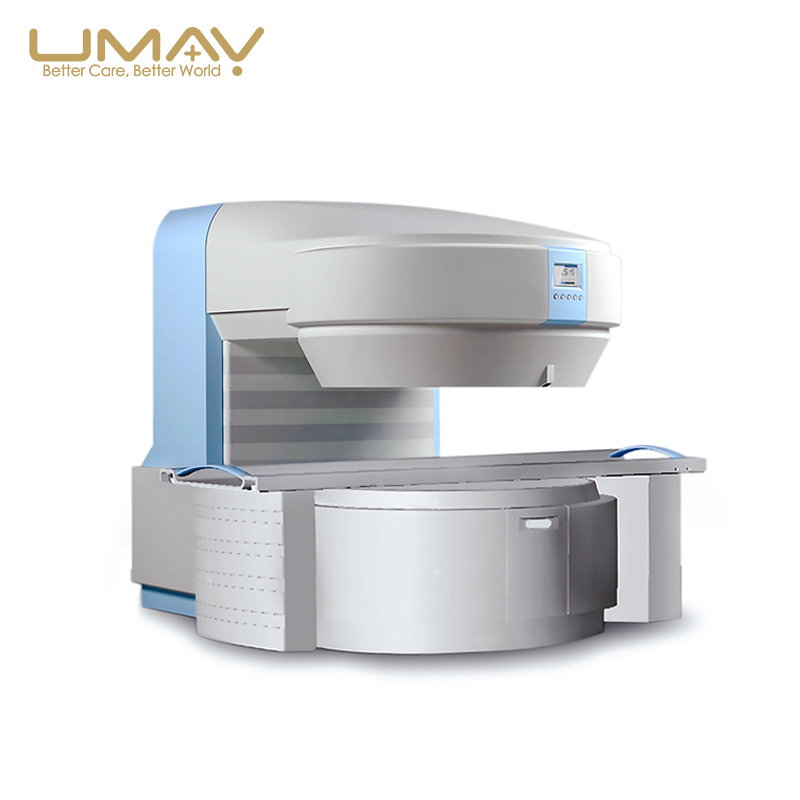
0.35T Open Permanent Magnet MRI System
The 0.35T Open Permanent Magnet MRI System is designed for hospitals, diagnostic centers and healthcare projects that require a routine clinical MRI platform with an open patient-access architecture.
The system combines a 0.35 Tesla Nd-Fe-B permanent magnet, C-shaped open geometry, automatic constant-temperature magnet control, 4-channel digital RF acquisition, configurable receiving coils, a 200 kg manual patient table and a Windows-based MRI workstation.
Unlike superconducting MRI platforms, the permanent-magnet architecture does not require a superconducting liquid-helium magnet system. This makes the 0.35T platform a practical option for facilities where open patient access, routine MRI capability and infrastructure planning are major project considerations.
Other MRI Field Strength Options
UMY Medical supplies permanent-magnet and superconducting MRI systems for projects with different examination requirements, patient volumes, site conditions and future expansion plans.
0.5T Open Permanent Magnet MRI
A higher-field open permanent-magnet MRI platform with a dual-column design, 25 mT/m gradient system and 4-channel digital RF acquisition.
1.5T Superconducting MRI
A higher-field superconducting MRI platform with 16-channel digital acquisition for broader clinical requirements and higher-throughput hospital imaging workflows.
Why Choose a 0.35T Open MRI System?
A 0.35T permanent-magnet MRI is not simply a lower-field version of a superconducting scanner. It serves a different project requirement: routine MRI capability combined with open patient access and a permanent-magnet architecture.
Open Patient Access
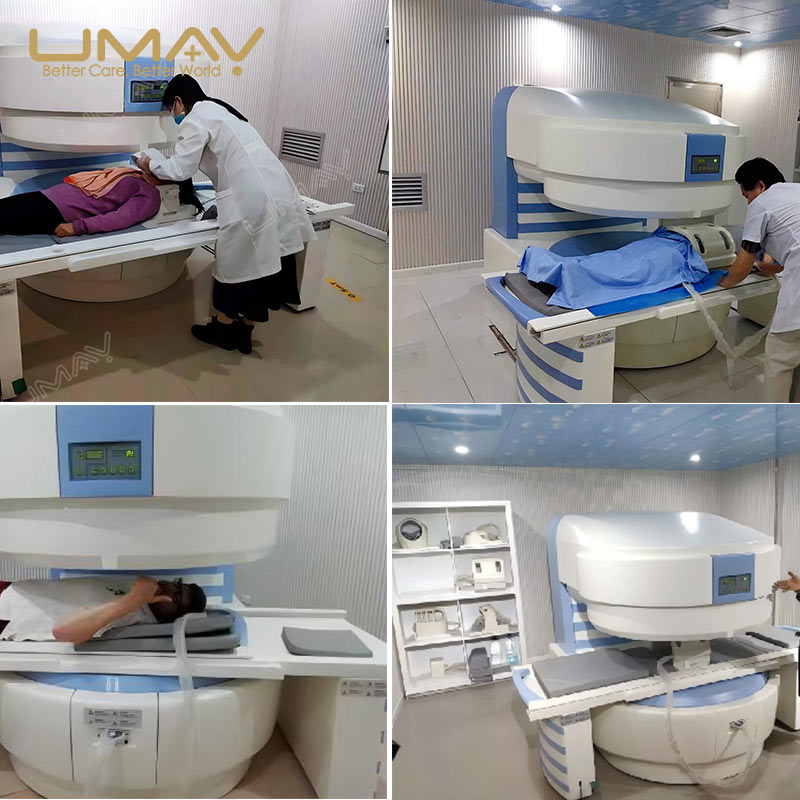
The C-shaped magnet leaves the examination area more open than a conventional cylindrical MRI bore and provides greater lateral access around the patient.
Permanent-Magnet Architecture
The Nd-Fe-B magnet generates the 0.35T static magnetic field without using a superconducting magnet and its associated liquid-helium system.
Routine Clinical MRI
With the appropriate coils and software configuration, the platform can support routine brain, spine, joint, musculoskeletal and selected body examinations.
Flexible Coil Configuration
Dedicated receiving coils can be selected according to the hospital’s examination mix rather than using one fixed coil package for every project.
0.35T C-Shaped Permanent Magnet
The MRI system uses an open C-shaped permanent magnet constructed with high-grade Nd-Fe-B magnetic material.
An automatic constant-temperature control system is used to maintain stable magnet operating conditions during routine clinical use.
| Magnetic Field Strength | 0.35T |
|---|---|
| Magnet Type | Permanent Magnet |
| Magnet Material | Nd-Fe-B |
| Magnet Structure | Open C-Shaped Architecture |
| Temperature Control | Automatic Constant-Temperature Control |
Open MRI Design and Patient Accessibility
The C-shaped magnet architecture creates an open examination space with lateral access around the patient. This configuration can be valuable when patient access and positioning are important parts of the MRI workflow.
More Open Examination Space
The open-sided structure reduces the visual enclosure around the patient compared with a conventional cylindrical MRI magnet.
Accessible Patient Positioning
The open magnet geometry provides operators with greater access to the patient during preparation and positioning.
Suitable for Routine Imaging Workflows
The system is intended for facilities performing routine clinical MRI examinations using dedicated anatomical receiving coils.
4-Channel Digital RF Acquisition
The 0.35T MRI platform uses an all-digital four-channel RF acquisition system. The RF subsystem works with dedicated receiving coils to acquire signals from different anatomical regions.
| RF Architecture | All-Digital |
|---|---|
| RF Channels | 4 Channels |
| Receiving Coil Configuration | Dedicated Anatomical Coils |
MRI Receiving Coil Options
The 0.35T open MRI system supports multiple receiving-coil options for different anatomical regions. The supplied project information specifies five coils in the standard configuration, while the final selection can be adjusted according to clinical requirements.
| Head Coil | Available |
|---|---|
| Neck Coil | Available |
| Large Body Coil | Available |
| Small Body Coil | Available |
| Knee Coil | Available |
| Shoulder Coil | Available |
| Wrist Coil | Available |
| Ankle Coil | Available |
| Standard Coil Package | 5 Coils; Final Selection Subject to Project Configuration |
The required coil package should be confirmed from the hospital’s intended examination mix before the final quotation.
Typical Clinical Applications
The examination range of a 0.35T MRI system depends on the selected receiving coils and installed MRI software. The platform can be configured for routine imaging across several anatomical regions.
Brain and Head MRI
Head-coil configurations can be used for routine brain and head magnetic resonance examinations.
Spine Imaging
The system can support cervical and spinal MRI workflows when configured with the appropriate receiving coil and protocol.
Knee and Joint Imaging
Dedicated knee and joint coils support routine musculoskeletal MRI examinations.
Shoulder Imaging
A dedicated shoulder coil can be selected for musculoskeletal examination requirements involving the shoulder region.
Wrist and Ankle Imaging
Dedicated wrist and ankle receiving coils are available for selected extremity examinations.
Selected Body Imaging
Small-body and large-body coils can be configured for selected body MRI examinations according to the installed software and clinical protocol.
Manual Patient Table
The 0.35T permanent-magnet MRI system uses a manually operated patient table with horizontal positioning.
The manual mechanism provides a straightforward positioning structure without relying on an electric table drive system.
| Patient Table Type | Manual |
|---|---|
| Positioning | Manual Horizontal Movement |
| Maximum Patient Load | 200 kg |
MRI Workstation and Hospital Connectivity
The MRI workstation provides the operator interface for examination setup, scanning and routine image management.
The supplied platform uses a Windows operating system and a 24-inch display. DICOM printing and RIS connectivity are supported according to the installed project configuration.
| Operating Platform | Windows |
|---|---|
| Display | 24-inch Monitor |
| MRI Operating Software | Included |
| DICOM Printing | Supported According to Configuration |
| RIS Integration | Supported According to Configuration |
0.35T Open MRI or 0.5T / 1.5T MRI?
MRI field strength should be selected according to the intended examinations, patient volume, site conditions, required workflow and future clinical requirements rather than field strength alone.
Consider 0.35T When
The project focuses on routine MRI examinations, open patient access and a permanent-magnet MRI architecture.
Consider 0.5T When
An open permanent-magnet system is still preferred, but the project requires a higher magnetic field strength and the expanded 0.5T hardware and imaging configuration.
Consider 1.5T When
Higher patient throughput, a broader examination mix and a general-purpose superconducting MRI platform are central project requirements.
MRI Project Planning
Purchasing an MRI system involves more than selecting the field strength. The final project should also review the examination mix, receiving coils, room layout, RF shielding, electrical conditions, imaging-network requirements and installation responsibilities.
For hospitals, imaging centers and distributors planning a new MRI installation, these project requirements should be reviewed before the final system configuration is confirmed.
Before Ordering
Please provide the following information so that the 0.35T MRI configuration and project requirements can be reviewed before quotation.
- Destination country and installation location.
- Required quantity.
- Expected MRI examination types.
- Expected daily patient volume.
- Required receiving-coil configuration.
- Required MRI software and clinical applications.
- Available MRI room dimensions and site layout.
- Local electrical power conditions.
- RF shielding and room-preparation status.
- DICOM / PACS / RIS integration requirements.
- Installation and training requirements.
- Local registration, tender or technical documentation requirements.
For projects requiring another field strength, compare our
0.5T Open Permanent Magnet MRI System and 1.5T Superconducting MRI System
View our complete
MRI Systems
range for additional magnetic resonance imaging configurations.
Request a 0.35T MRI Configuration and Quote
Contact UMY Medical to confirm the receiving-coil package, intended examinations, installation requirements and export quotation for the 0.35T Open Permanent Magnet MRI System.
Frequently Asked Questions
What is a 0.35T open MRI system?
A 0.35T open MRI system uses a 0.35 Tesla magnetic field in an open scanner architecture. This system uses a C-shaped Nd-Fe-B permanent magnet rather than a superconducting magnet.
Does a 0.35T permanent magnet MRI require liquid helium?
The 0.35T system uses a permanent Nd-Fe-B magnet and does not use a superconducting liquid-helium magnet system.
How many RF channels does this 0.35T MRI provide?
The supplied configuration uses an all-digital 4-channel RF acquisition system.
Which MRI examinations can the 0.35T system support?
With the appropriate receiving coils and software configuration, the system can support routine brain, spine, knee, joint, shoulder, wrist, ankle and selected body MRI examinations.
Which receiving coils are available?
Available coil options include head, neck, large body, small body, knee, shoulder, wrist and ankle coils. Five coils can be supplied in the standard project configuration, with final selection based on the intended examinations.
What is the maximum patient weight?
The manual patient table is specified for a maximum patient load of 200 kg.
Who should consider a 0.35T open MRI system?
It can be considered by hospitals and diagnostic centers whose primary requirements are routine MRI examinations, open patient access and a permanent-magnet MRI platform. The final selection should also consider patient volume, examination mix, room conditions and future expansion needs.
What information is needed for a 0.35T MRI quotation?
Please provide the destination country, intended examinations, expected patient volume, required coils, available room dimensions, electrical conditions, imaging-network requirements and any installation or tender specifications.



Reviews
There are no reviews yet.