
Digital Blood Cell Counter for Manual Differential Counting
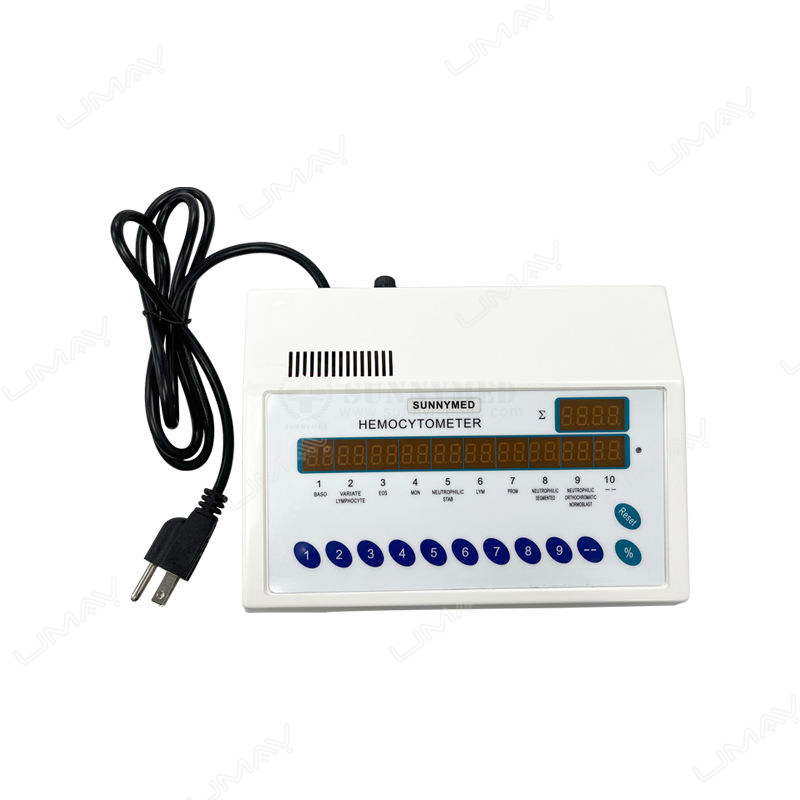
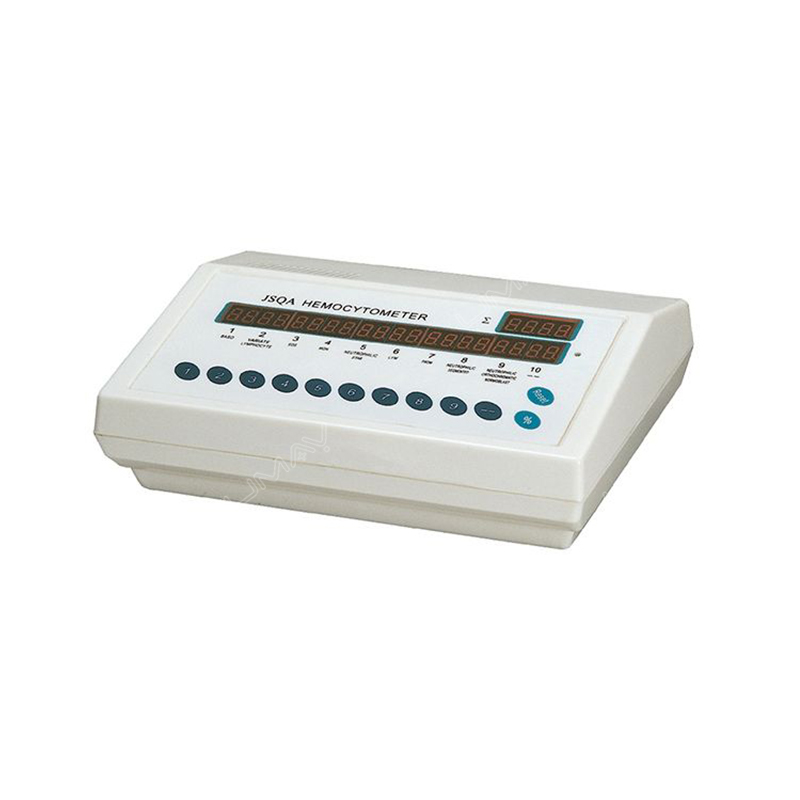
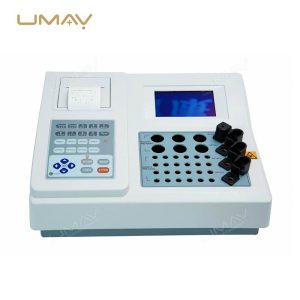
The UMH-JSQA is a microcomputer-controlled digital blood cell counter designed to assist manual microscopic blood cell classification and counting in clinical laboratories.
The instrument integrates counting, numerical statistics and display functions. Ten independent counting groups allow laboratory personnel to record different cell categories while simultaneously viewing the individual values and accumulated total count.
Its compact benchtop design is suitable for routine microscopy-based hematology workflows in hospitals, clinics and laboratories where manual blood cell differential counting is performed.
Key Features
10 Counting Groups
Ten independent two-digit counting groups allow multiple blood cell categories to be recorded during microscopic differential counting.
Simultaneous Count Display
Individual group values and the accumulated total count can be displayed during the counting process for easier result monitoring.
0–99 Count per Group
Each counting category provides a listed count capacity from 0 to 99.
Microcomputer Control
The electronic counting system combines count input, numerical statistics and display functions in a compact laboratory instrument.
Compact Benchtop Design
With external dimensions of approximately 220 × 166 × 78 mm, the unit requires limited laboratory bench space.
Low Power Consumption
The listed power rating is only 5 W, making the instrument suitable for routine laboratory operation.
Clinical and Laboratory Applications
The UMH-JSQA is intended to support manual cell classification and counting performed while examining blood samples under a microscope.
- Manual blood cell differential counting.
- Clinical microscopic blood examination.
- Routine hematology microscopy workflows.
- Hospital clinical laboratories.
- Diagnostic laboratories.
- Clinics and smaller laboratory facilities.
- Teaching and laboratory demonstration where manual differential counting is required.
How the Blood Cell Counter Is Used
The counter is designed to assist laboratory personnel during manual microscopic examination. The operator identifies cells under the microscope and records each observed cell using the corresponding counting key.
Each valid key input increases the selected category count and contributes to the accumulated total. This helps reduce the need for handwritten tallying during routine differential cell counting.
The instrument itself does not automatically analyze a blood sample and should not be confused with an automated hematology analyzer.
Counting System
| Counting Method | Microcomputer-Controlled Manual Count Input |
|---|---|
| Maximum Count Categories | 10 Groups |
| Count Capacity per Group | 0–99 |
| Display Function | Individual Group Counts and Total Count |
| Counting Application | Manual Microscopic Blood Cell Classification |
Technical Specifications
| Model | UMH-JSQA |
|---|---|
| Product Type | Digital Blood Cell Counter / Hemocytometer Counter |
| Control | Microcomputer Controlled |
| Maximum Count Category | 10 Groups |
| Count Capacity of Each Group | 0–99 |
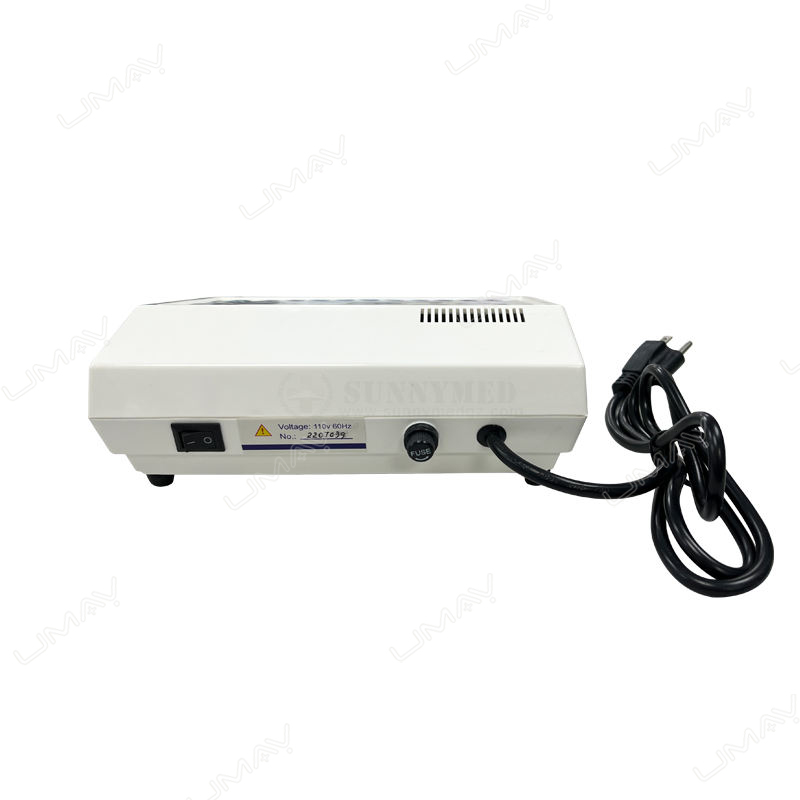
| Power Supply | AC 100–240 V, 50/60 Hz |
| Power Rating | 5 W |
| External Dimensions | 220 × 166 × 78 mm |
Manual Counting Workflow
1. Prepare the Sample
Prepare the blood specimen and microscope slide according to the laboratory’s established examination procedure.
2. Perform Microscopic Examination
Observe the prepared specimen under a suitable microscope and identify the required blood cell categories.
3. Record Each Cell
Press the corresponding counting key each time the selected cell type is identified.
4. Review Counts
Monitor individual category counts and the accumulated total on the instrument display during the examination.
Who Is This Counter Suitable For?
The UMH-JSQA is particularly suitable for laboratories that still perform routine manual microscopic cell classification or require a dedicated counter for verification and microscopy workflows.
- Small and medium-sized hospitals.
- Clinical laboratories.
- Diagnostic centers.
- Outpatient laboratories.
- Medical teaching laboratories.
- Laboratories requiring manual differential counting support.
Digital Counter vs. Automated Hematology Analyzer
| Item | UMH-JSQA Blood Cell Counter | Automated Hematology Analyzer |
|---|---|---|
| Cell Identification | Performed manually by the operator under a microscope | Performed automatically by the analyzer |
| Count Entry | Manual key input | Automatic sample measurement |
| Main Purpose | Assist manual differential cell counting | Automated CBC and hematology analysis |
| Sample Processing | No automatic blood sample processing | Automated according to analyzer configuration |
| Typical Environment | Microscopy and manual verification workflows | Routine automated hematology testing |
Before Ordering
Please confirm the intended laboratory application and local electrical requirements before ordering the UMH-JSQA.
- Required quantity.
- Destination country.
- Local voltage and plug standard.
- Intended manual blood cell counting application.
- Required accessories or laboratory equipment.
- Any tender or technical documentation requirements.
Request a Blood Cell Counter Quotation
Need a digital blood cell counter for a hospital, laboratory, distributor project or tender? Send us your quantity, destination and electrical requirements for quotation.
Send Your Requirements
Please provide the required quantity, destination country, voltage and plug requirements, and any related laboratory equipment needed for your project.
Frequently Asked Questions
What is the UMH-JSQA blood cell counter used for?
It is used to assist laboratory personnel with manual microscopic blood cell classification and counting by electronically recording individual cell categories and the total count.
Does the UMH-JSQA automatically analyze blood samples?
No. The operator identifies cells manually under a microscope and enters each count using the corresponding key. It is not an automated hematology analyzer.
How many cell categories can be counted?
The instrument provides up to 10 counting groups, with a listed capacity of 0–99 for each group.
What is the power requirement?
The listed configuration supports AC 100–240 V, 50/60 Hz with a 5 W power rating.
Is it suitable for small laboratories?
Yes. Its compact design and manual counting workflow make it suitable for hospitals, clinics and laboratories that perform microscopic differential counting.
Reviews
There are no reviews yet.