
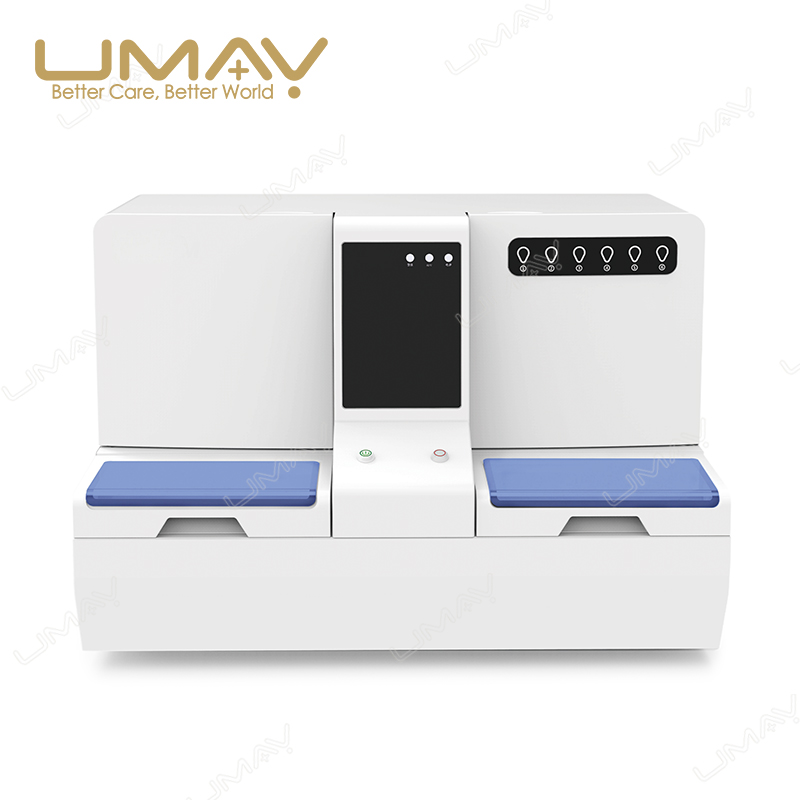
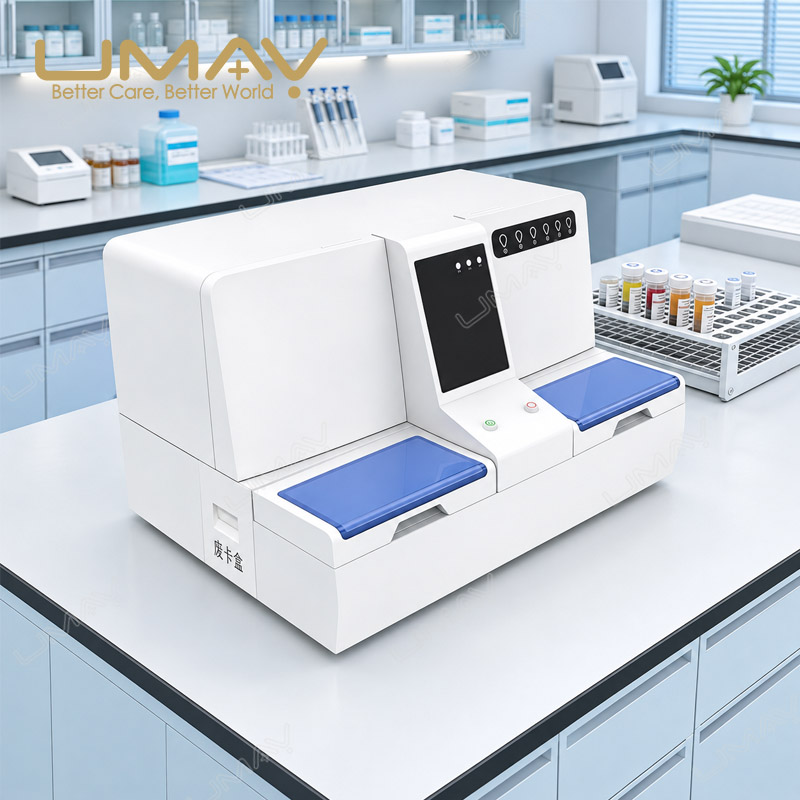
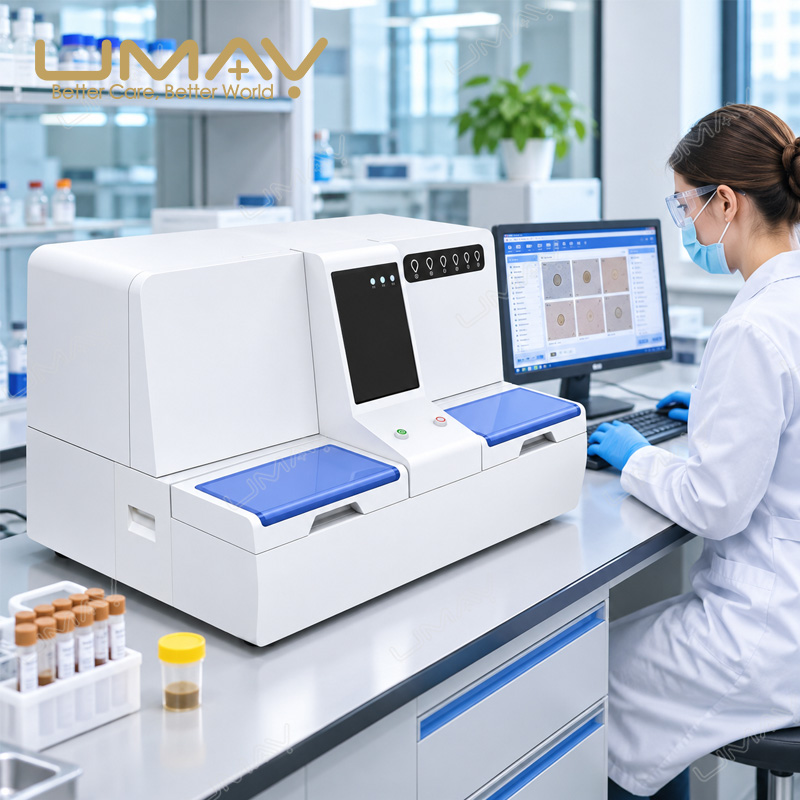
The UMY-920A Fully Automatic Feces Analyzer streamlines stool examination in clinical laboratories and diagnostic centers. It brings automated sample preparation, digital microscopic imaging, formed-element analysis, reagent-card testing and result reporting together in a single workflow.
Automated Stool Testing for Clinical Laboratories
Routine stool examination involves sample preparation, microscopy and documentation of findings. The UMY-920A automates liquid handling, sample mixing and digital image acquisition, helping laboratory staff carry out a more consistent testing workflow.
Designed for human stool specimens, the analyzer supports qualitative and semi-quantitative examination of formed elements such as red blood cells, white blood cells and parasite eggs. Compatible reagent cards also support selected assays, including fecal occult blood. Qualified laboratory personnel review the findings alongside clinical information and other test results.
Key Features
Automated specimen preparation
The system automatically adds diluent, stirs, mixes and filters specimens before transferring prepared sample liquid for examination. The sampling needle is cleaned after dispensing.
Microscopic image capture and formed-element review
Digital microscopy combines automatic positioning, focusing and image capture with software-assisted identification and counting of formed elements. Images and results can be reviewed by laboratory personnel.
Reagent-card testing within the workflow
A built-in reagent-card system handles dispensing, incubation and image capture during selected assays. The available test menu is determined by the compatible reagent cards and assay setup.
Digital reports and image records
The software brings patient information, sample images and test results into one interface for review, searching, storage and report printing.
Laboratory information system connectivity
The system supports laboratory information system (LIS) communication over Ethernet using the HL7 protocol, allowing result exchange within a compatible laboratory IT environment.
How the Analysis Workflow Operates
- Specimen loading: Stool is collected in a dedicated sample vial and loaded into a sample rack.
- Automated preparation: the system dispenses diluent, mixes and filters the sample, and transfers prepared liquid for examination.
- Microscopic analysis: the imaging system focuses and captures specimen images for software-assisted classification and counting.
- Reagent-card analysis: prepared sample liquid is dispensed onto the selected reagent cards for the relevant assays.
- Review and reporting: laboratory personnel review results and images, then save, print or transmit reports through the configured system.
Testing steps and reagent-card selection are managed through the analyzer software.
Testing Scope and Reporting
| Area | Function |
|---|---|
| Microscopic examination | Qualitative or semi-quantitative evaluation of formed elements such as red blood cells, white blood cells and parasite eggs. |
| Specimen morphology | Digital morphology image capture and review. |
| Reagent-card assays | Compatible reagent-card assays, including fecal occult blood testing and other available items selected from the assay menu. |
| Result management | Sample records, microscopy images, result review, report printing and LIS communication. |
The available reagent-card menu can be selected to match the laboratory’s testing requirements.
Technical Specifications
The analyzer specifications below cover performance, sample handling and installation requirements.
| Parameter | Specification |
|---|---|
| Analyzer type | Fully automatic feces analyzer |
| Sample type | Human feces specimens |
| Approximate specimen quantity | One level spoonful, approximately 0.3 mL |
| Diluent dispensing volume | 6 mL per sample |
| Sample rack | 10 sample vials per rack |
| Power supply | AC 100–240 V, 50/60 Hz |
| Input power | ≤150 VA |
| Operating temperature | 10–35°C |
| Operating relative humidity | ≤90%, without condensation |
| LIS interface | Ethernet connection with HL7 communication |
Installation and Laboratory Requirements
The UMY-920A is intended for an indoor laboratory environment with a level, stable work surface, reliable grounding, adequate ventilation and space for the analyzer, operating computer and associated reagent and waste containers.
- Allow at least 200 mm behind the analyzer and 600 mm at the front and sides for access, ventilation and tubing connections.
- Provide a grounded AC 100–240 V, 50/60 Hz supply and verify local electrical requirements.
- Provide workspace for the computer, monitor, reagent containers, waste collection and a printer where required.
- Arrange trained operators, appropriate quality control procedures and safe handling of biological specimens and waste.
- Plan IT connectivity, LIS integration and installation support as part of the laboratory setup.
Qualified technical personnel should carry out installation and maintenance. Laboratories should complete routine verification and quality control before clinical testing.
Consumables and System Components
The analyzer uses dedicated sample containers, liquid reagents and reagent cards. The operating computer, reporting setup and laboratory connectivity are also important parts of the complete installation.
| Item | Configuration details |
|---|---|
| Sample vials and racks | Sample-vial quantity, rack capacity and replacement supply. |
| Diluent and detergent | Diluent and cleaning solution, packaging and storage requirements. |
| Reagent / gold-standard cards | Available assays, compatible card types and reagent-card consumption. |
| Computer and software | Dedicated analyzer software, PC requirements, display and Windows operating system. |
| LIS integration | Ethernet/HL7 connection parameters and LIS setup. |
| Service and training | Installation, operator training, routine maintenance and after-sales support. |
Frequently Asked Questions
What samples can the UMY-920A analyze?
The UMY-920A is designed for human stool specimens in clinical laboratories and diagnostic centers.
Does it include fecal occult blood testing?
Fecal occult blood testing is supported through compatible reagent cards. Other test items are available according to the selected reagent-card menu.
Can results be transmitted to a hospital LIS?
Yes. The system supports Ethernet-based LIS communication using HL7. Interface setup is coordinated with the laboratory’s information system.
Is the computer included with the analyzer?
The analyzer operates with a dedicated computer and software. The PC, monitor, printer and licensed operating system can be specified as part of the equipment package.
What consumables are used for routine testing?
Routine operation uses specimen vials, diluent, detergent and compatible reagent cards. Reagent-card types depend on the laboratory’s selected tests.
Request a Quote for the UMY-920A
Share your laboratory’s approximate daily sample volume, required test items and destination country. UMY Medical can prepare a quotation covering the analyzer, system components, reagents and LIS connectivity.
Reviews
There are no reviews yet.