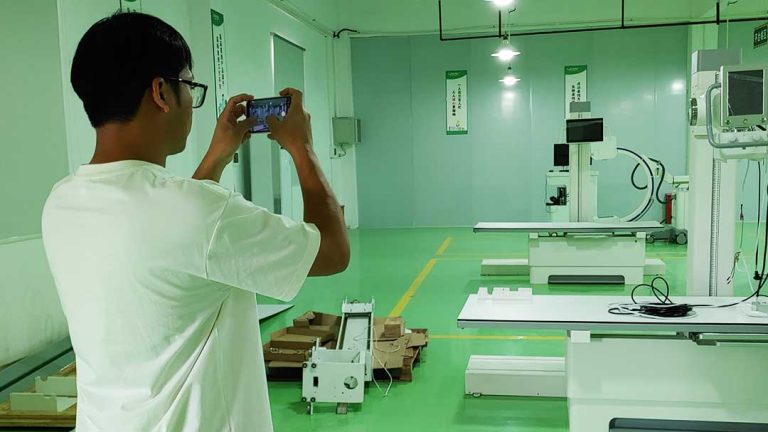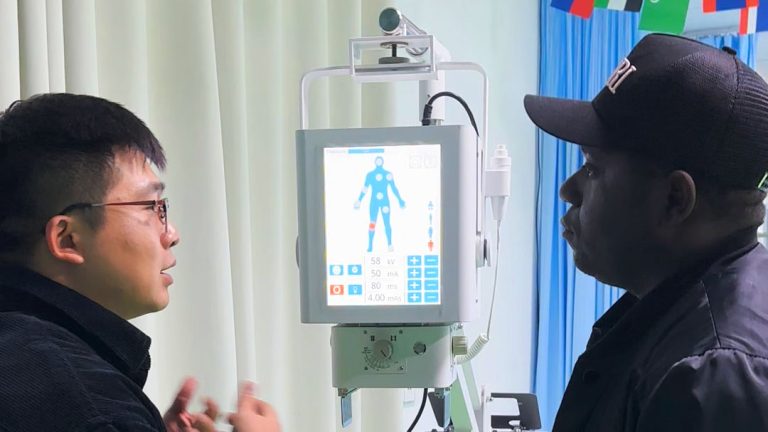
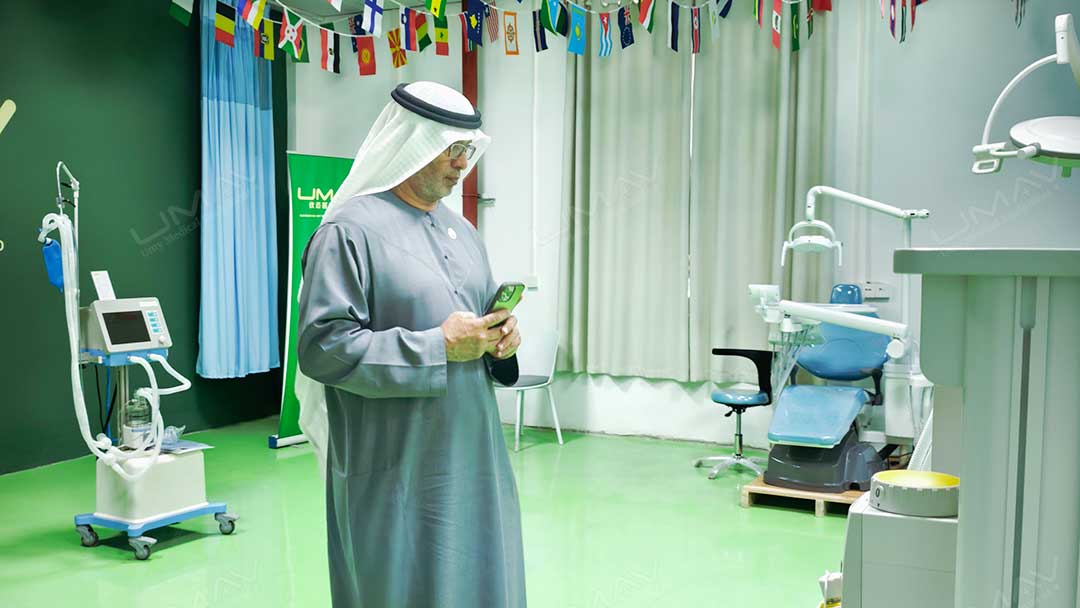
Last month, a regional healthcare leader from the UAE visited our showroom. He didn’t just walk past the displays; he spent a long time examining one of our anesthesia machines, taking close-up photos of the flow meters and vaporizer mounts. He wasn’t looking for a sales pitch; he was looking for reliability.
In the Middle East, where supply chains can be unpredictable, hospital managers are prioritizing equipment that works every time, without exception. A well-equipped OR isn’t a luxury, it’s a necessity for emergency readiness.
Precision for High-Stakes Environments
The visitor was particularly interested in the machine’s flexibility. It supports Semi-open, Semi-closed, and Closed circuit modes, which means it can handle both adult and pediatric patients. For a hospital that needs to be ready for any patient at any hour, that versatility is essential.
The clinical specs are built for that kind of control:
- Tidal Volume: 1600ml
- Respiratory Frequency: 1 to 65 bpm
- I:E Ratio: 8:1 to 1:8
- Oxygen Flush: 25–75 L/min
These settings provide the precision anesthesiologists need when there is no margin for error.
Gas Delivery and Stability
The gas delivery system is designed to be resilient. A 4-tube flow meter (2 × O2, 2 × N2O) includes a 25% minimum oxygen linkage to ensure oxygen levels never drop too low by accident. It operates on a gas supply pressure of 0.27 to 0.55 Mpa, fitting the standard pipeline setups found in most regional hospitals.
The unit also works with Halothane, Enflurane, Isoflurane, and Sevoflurane vaporizers, giving surgical teams the freedom to use whichever agents they have in stock.
Safety Alarms That Work
The safety features are the final line of protection for the patient. The APL valve and bellows stop automatically at 6 kPa to prevent lung injury from excessive pressure. Real-time alarms monitor airway pressure and oxygen levels, with a dedicated Low O2 alarm that triggers the moment supply pressure drops below 0.15 Mpa. In a busy surgical ward, these features provide the quiet confidence that the equipment is watching the patient’s back.
Built for Operational Resilience
This machine is designed for hospitals that need to stay operational during power fluctuations. It’s compatible with 100–240V power and includes an optional 12V DC battery backup that provides at least 120 minutes of operation. For field hospitals or medical centers in remote areas, this continuity is a requirement, not an option. At under 50W power consumption and a compact footprint (92 × 62 × 144 cm), it fits easily into any surgical layout.
A Visit That Reflects Local Priorities
The gentleman stayed a long time, asking detailed questions about the hardware. He knew what many spreadsheets overlook: a hospital is only as reliable as the tools inside it.
We welcome healthcare leaders from across the UAE and the Middle East to visit our showroom. Whether you are building a new surgical wing or upgrading older equipment, our team is here to walk you through the specifications and configurations that fit your facility.
When it matters most, the equipment has to work.