
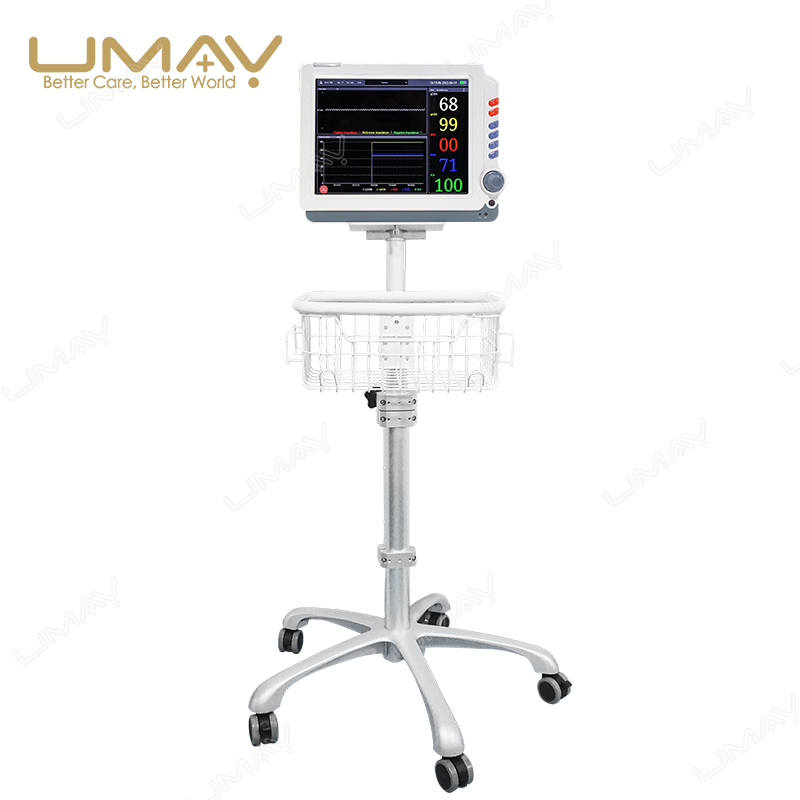
Anesthesia Depth Monitor UMPM024 for General Anesthesia and Sedation Monitoring
The UMPM024 Anesthesia Depth Monitor is designed for healthcare facilities that require continuous EEG-based monitoring during general anesthesia, sedation and related perioperative workflows.
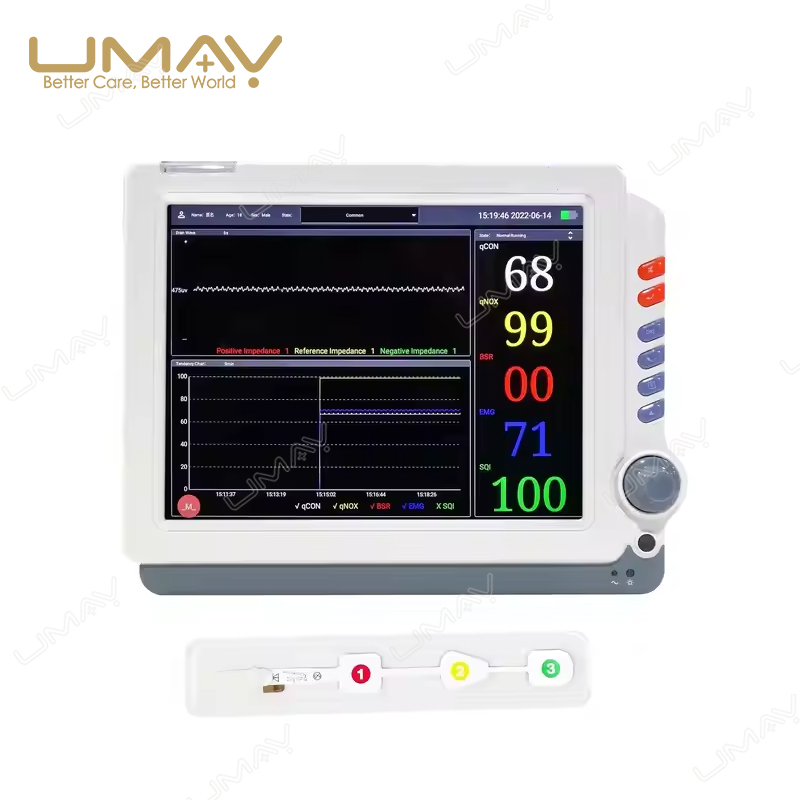
The monitor processes EEG and EMG signals to display anesthesia depth index, analgesic index, burst suppression ratio (BSR), EMG, signal quality and real-time EEG waveform information.
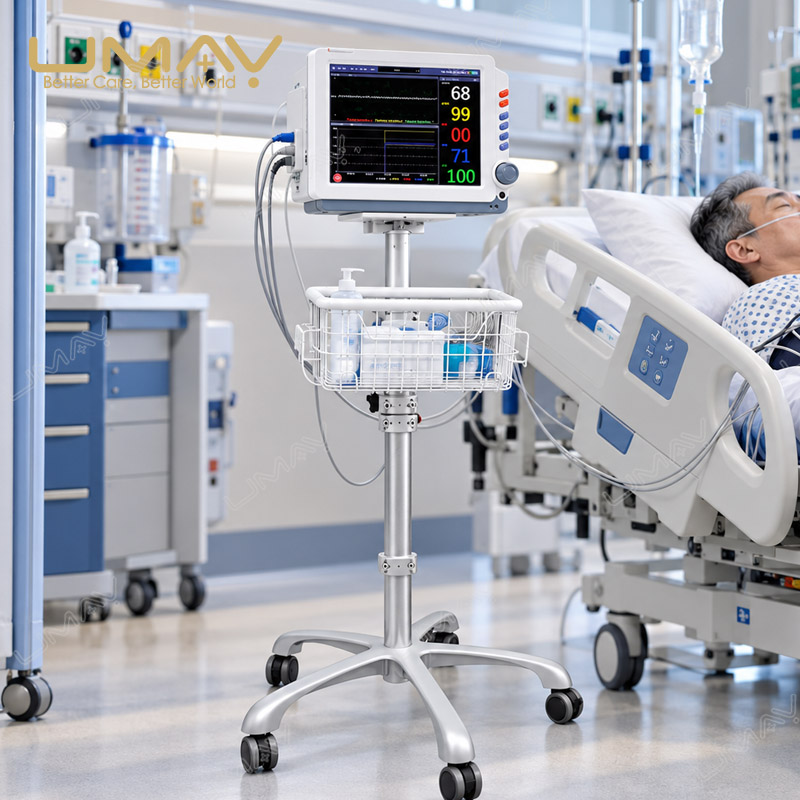
A large touch-screen interface, patient-history management, trend review, configurable alarms, rechargeable battery and network/data-management functions support use in operating rooms, day-surgery departments, anesthesia recovery areas and selected sedation-monitoring environments.
System Highlights
EEG-Based Anesthesia Depth Monitoring
The system uses EEG and EMG signals as input data to generate anesthesia-related monitoring indices for clinical reference.
Multiple Monitoring Parameters
Anesthesia depth index, analgesic index, BSR, EMG, SQI and electrode impedance can be reviewed from the same monitoring interface.
2000 Samples/Second EEG Acquisition
The supplied operating manual specifies an EEG sampling rate of 2000 samples per second with real-time data updating.
Real-Time EEG Waveform
Real-time EEG waveform display allows clinicians to review raw signal activity together with calculated monitoring parameters.
Large Touch-Screen Interface
The high-brightness touch-screen interface provides access to monitoring parameters, trends, alarms, patient information and system settings.
AC and Battery Operation
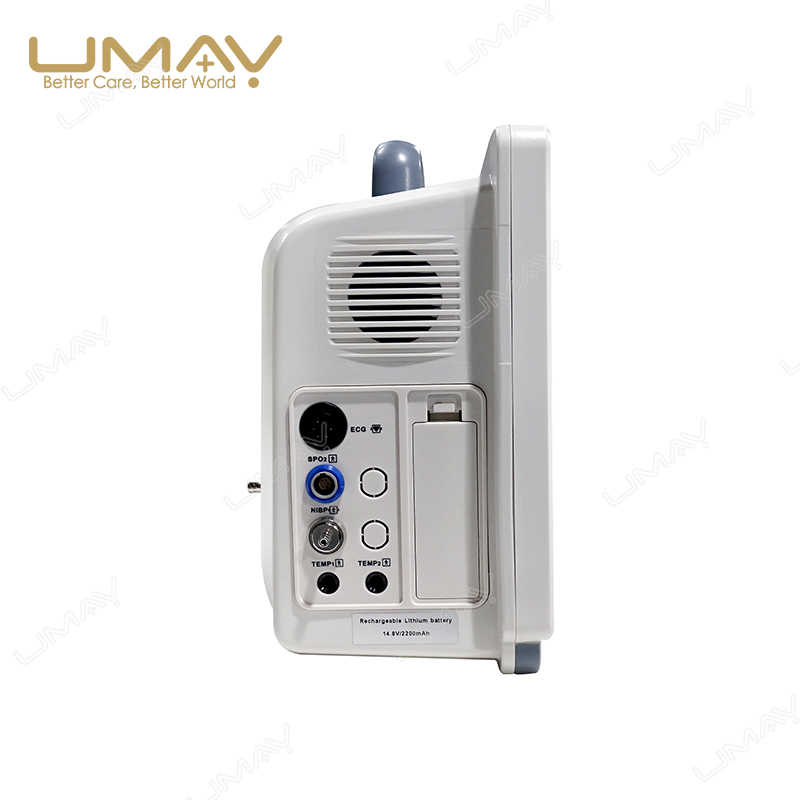
The monitor includes a carrying handle and rechargeable lithium-ion battery for flexible hospital monitoring and patient-transfer workflows.
Anesthesia Monitoring Parameters
The UMPM024 combines several EEG- and EMG-derived indicators to provide complementary information during anesthesia and sedation monitoring.
| Anesthesia Depth Index | 0–100 index used to reflect changes in the patient’s level of consciousness according to the manufacturer’s monitoring algorithm. |
|---|---|
| Analgesic Index | 0–100 index associated with the probability of response to noxious stimulation during anesthesia or sedation. |
| Burst Suppression Ratio (BSR) | Percentage-based display of EEG burst-suppression activity. |
| EMG | Displays facial electromyographic activity alongside EEG-based monitoring parameters. |
| Signal Quality Index (SQI) | 0–100 indicator used to assess acquired signal quality. |
| Electrode Impedance | Displays positive, reference and negative electrode impedance information. |
| EEG Waveform | Real-time EEG waveform display and trend review. |
Monitoring parameters are intended to provide reference information to trained healthcare professionals and should be interpreted together with the patient’s clinical condition and other monitoring information.
Anesthesia Depth Index
The anesthesia depth index uses EEG and EMG signal information to generate a numerical value from 0 to 100.
The supplied operating manual describes higher values as corresponding to greater consciousness and lower values as corresponding to progressively deeper anesthesia states.
| Anesthesia Depth Index | Clinical Status Described in Supplied Manual |
|---|---|
| 90–100 | Awake |
| 80–90 | Sleepy |
| 60–80 | Light anesthesia or sedation |
| 40–60 | Range described as suitable for surgical anesthesia |
| 10–40 | Deep anesthesia, often with burst suppression |
| 0–10 | Very deep suppression state described in the supplied manual |
These ranges should not replace clinical judgment, anesthetic assessment or other patient-monitoring information.
Analgesic Index
The analgesic index is intended for use during general anesthesia and sedation and is associated with the probability of patient response to noxious stimulation.
A higher value represents a higher probability of response according to the supplied operating manual.
The analgesic index is not a direct pain measurement. It should be interpreted together with other clinical information before adjustment of anesthetic or sedative management.
Burst Suppression, EMG and Signal Quality
Burst Suppression Ratio
BSR provides a percentage-based indication of EEG burst-suppression activity during the monitored period.
EMG Monitoring
EMG provides information related to facial muscle activity and is displayed alongside EEG-derived parameters.
Signal Quality Index
SQI is displayed from 0 to 100. Higher values indicate better acquired signal quality, helping the user identify interference or poor electrode contact.
EEG Sensor and Electrode Monitoring
The system uses a disposable EEG sensor connected to the monitor through the supplied sensor lead wire.
Electrode impedance is monitored to help the operator confirm sensor contact and identify poor signal acquisition before or during monitoring.
Three-Point Sensor Configuration
The supplied sensor placement information uses positive, reference and negative electrode positions in the forehead and facial area.
Automatic Lead Detection
The monitor automatically checks whether the sensor is connected and provides a lead-off indication when the connection is abnormal.
Impedance Display
Positive, reference and negative impedance values are displayed to support sensor preparation and signal-quality checking.
Patient Data and Trend Management
The UMPM024 provides patient-record management and trend-review functions for routine anesthesia-monitoring workflows.
Patient Information
Patient name, age, gender and case identification information can be created and modified through the touch-screen interface.
Parameter Trend Graphs
Trend graphs can display anesthesia depth, analgesic index, BSR, EMG and signal-quality data over time.
Historical Records
Historical patient records can be searched by name, gender, age, date, monitoring duration and case number.
Optional Extended Storage
The operating manual lists an optional 8 GB storage configuration for extended historical data and waveform storage.
Alarm and Clinical Event Management
Alarm limits and alarm levels can be configured for monitored parameters.
When a configured parameter exceeds its alarm threshold, the monitor can provide visual and audible alarm indications.
Clinical event markers include general monitoring, induction, intubation, surgery, maintenance, suturing, awakening and patient-awake events.
Connectivity and Data Management
USB Backup and Import
Local monitoring data can be backed up to a USB storage device and imported when required.
Network Interface
The rear panel includes a network interface for connection to compatible central monitoring or departmental systems.
Wi-Fi Configuration
The supplied software includes Wi-Fi network configuration and network-based time synchronization functions.
Chinese / English Interface
The system supports Chinese and English operating-interface options according to the supplied manual.
Typical Clinical Applications
The UMPM024 is intended for trained healthcare professionals in hospital environments requiring monitoring of anesthesia depth or consciousness state.
General Anesthesia
Supports EEG-based monitoring of anesthesia-related parameters during general anesthesia.
Day Surgery
The compact monitor can be used in same-day surgery environments requiring anesthesia or sedation monitoring.
Anesthesia Recovery
Monitoring parameters and historical trends can support post-anesthesia observation workflows.
ICU Sedation Monitoring
The supplied manual includes selected sedated ICU patients among the intended monitoring environments.
Technical Specifications
| Model | UMPM024 |
|---|---|
| Product Type | Anesthesia Depth Monitor |
| Display | Large Touch-Screen LCD, 12-Inch Class |
| EEG Sampling Rate | 2000 Samples / Second |
| Anesthesia Depth Index | 0–100 |
| Analgesic Index | 0–100 |
| Burst Suppression Ratio | 0–100% |
| Signal Quality Index | 0–100 |
| Brainwave Sensitivity | ±475 μV |
| Noise Level | <2 μVp-p, 1–150 Hz |
| Common Mode Rejection Ratio | >100 dB |
| Input Impedance | >50 MΩ |
| Power Supply | AC 100–240V, 50/60Hz |
| Maximum Input Power | 110 VA |
| Battery | Rechargeable Lithium-Ion Battery; Final Capacity to Be Confirmed with Shipment Configuration |
| Dimensions | 320 × 260 × 160 mm |
| Weight | Approx. 4.5 kg |
| Operating Temperature | 0°C–40°C |
| Operating Humidity | ≤85% |
Clinical Use and Important Limitations
- The UMPM024 is intended for use by trained healthcare professionals in healthcare facilities.
- The monitor provides monitoring and reference information and is not a therapeutic device.
- Anesthesia depth, analgesic index, BSR and related parameters should be interpreted together with the patient’s clinical condition and other monitoring information.
- The analgesic index is not a direct pain measurement.
- The supplied manual states that accurate monitoring data may not be obtained in children under 2 years of age.
- The supplied manual states that the monitor should not be used in an MRI environment.
- Poor electrode contact, high impedance or low signal quality may affect monitoring reliability.
- The device is not intended for home use.
- The supplied manual states that the device is not suitable for use in environments containing flammable anesthetic gases.
Technical Information and Verification
The technical information on this page has been checked against the supplied UMPM024 operating manual, product brochure and packing list.
Some production-batch and project-specific details may vary. Final display specification, rechargeable battery capacity, applied-part classification, optional accessories and regulatory documentation should be reconfirmed against the final quotation, product label and shipment documents before ordering.
Clinical monitoring parameters are presented according to the manufacturer’s supplied documentation and should not be interpreted as a substitute for clinical judgment or institutional anesthesia protocols.
Standard Configuration
The supplied packing list includes the following items. Final shipment configuration should be confirmed with the quotation.
- UMPM024 anesthesia depth monitor main unit ×1.
- AC power cord ×1.
- Sensor lead wire ×1.
- Disposable EEG sensor ×1.
- Rechargeable lithium-ion battery ×1.
- English user manual ×1.
Before Ordering
Please confirm the intended monitoring environment, required accessories and final product configuration before requesting a quotation.
- Destination country and required quantity.
- Main intended application: general anesthesia, day surgery, anesthesia recovery or sedation monitoring.
- Required quantity of disposable EEG sensors.
- Required sensor lead wires and spare accessories.
- Final display specification.
- Rechargeable battery capacity and spare-battery requirements.
- Required language configuration.
- USB, Wi-Fi, network or central-monitoring requirements.
- Data-storage and export requirements.
- Mobile stand or trolley requirements.
- Final applied-part classification and regulatory documentation required by the destination market.
- Local registration, tender or technical-document requirements.
Request UMPM024 Configuration and Quote
Contact UMY Medical to confirm the UMPM024 anesthesia depth monitoring configuration, EEG sensor requirements, networking options and export quotation.
Frequently Asked Questions
What does the UMPM024 anesthesia depth monitor measure?
The UMPM024 displays anesthesia depth index, analgesic index, burst suppression ratio, EMG, signal quality, electrode impedance and real-time EEG waveform information.
What type of signal does the monitor use?
The monitor uses EEG and EMG signals acquired through a disposable EEG sensor and sensor lead wire.
What is the EEG sampling rate?
The supplied operating manual specifies an EEG sampling rate of 2000 samples per second.
Is the analgesic index a pain measurement?
No. The supplied operating manual states that the analgesic index is not a pain monitor. It is associated with the probability of response to noxious stimulation and should be interpreted together with other clinical information.
Can the UMPM024 store patient data?
Yes. Patient information, historical monitoring data and parameter trends can be stored and reviewed. The manual also lists an optional extended-storage configuration.
Does the monitor support network connection?
Yes. The supplied documentation lists network, Wi-Fi and USB backup/import functions. Final central-system integration requirements should be confirmed before ordering.
Can the UMPM024 operate on battery power?
Yes. The monitor uses a rechargeable lithium-ion battery. Final battery capacity should be confirmed with the quotation and shipment documents.
Where can the anesthesia depth monitor be used?
The supplied documentation includes general anesthesia, same-day surgery, anesthesia recovery and selected sedation-monitoring environments among its intended hospital applications.
Can the UMPM024 be used in an MRI room?
No. The supplied operating manual states that the monitor is not intended for use in an MRI environment.
What accessories are included?
The supplied packing list includes the main unit, AC power cord, sensor lead wire, disposable EEG sensor, rechargeable lithium-ion battery and English user manual.
Reviews
There are no reviews yet.